This city rewards the wrong version of me
On how an environment can amplify your worst traits instead of your best ones.
This city rewards the wrong version of me
I learned quickly that there were two versions of myself.
There was the “Soft Self”—the one who liked to read poetry in the morning, who walked slowly to look at the architecture, who wanted to listen to people rather than interrupt them. And then there was the “Sharp Self”—the one who walked fast, who interrupted to make a point, who checked email at 11 PM, who treated every interaction as a transaction.
In my hometown, the Soft Self was the default. It was a place where people lingered. But when I moved to the Metropolis (you know the one, or one like it), I found that the Soft Self was a liability.
The Soft Self got walked on in the subway. The Soft Self was overlooked for promotions because it didn’t “own the room.” The Soft Self was seen as “lacking ambition.”
So, I put the Soft Self away. And I brought out the Sharp Self.

The city loved the Sharp Self.
When I was impatient, the city rewarded me with efficiency. When I was aggressive in meetings, I got a raise. When I prioritized work over friendship, I was praised for my “dedication.”
I became a machine. I optimized my sleep, my diet, my commute. I listened to podcasts at 2x speed because regular walking felt like “wasted time.” I stopped calling my mother because I didn’t have a “hard out” for the conversation. I became a marvel of productivity.
And I felt, fundamentally, like I was rotting from the inside out.
The Environment as a Mold
We like to think our personality is fixed. That we are who we are, regardless of where we are. But that is a lie. We are fluids. We take the shape of the container we are poured into.
If you pour a human being into a container shaped like a shark tank, they will grow teeth. If you pour them into a gentle garden, they will grow roots.
I was in a shark tank. And I had grown rows and rows of teeth.
I remember a specific dinner. I was with an old friend who had visited from out of town. We were at a “hot” restaurant—the kind where you can’t hear yourself think, the tables are four inches apart, and the appetizers cost $24.
He started telling me a story about his dog getting sick. It was a sad story. A vulnerable story.
And I found myself checking my watch.
I wasn’t bored. I loved this friend. But my brain had been rewired by the city. It had been trained to ask: What is the takeaway here? What is the action item? How does this move the needle?
There was no action item. It was just human sorrow. And because my environment had trained me to devalue anything that wasn’t “productive,” I had lost the capacity to just be with someone.
I cut him off. “So is he okay now?” I asked, trying to rush to the conclusion.
He looked at me, surprised. “I don’t know yet,” he said.
I saw the hurt in his eyes. And in that moment, I saw what I had become.
The Feedback Loop
The problem with a place that rewards your worst traits is that it feels good in the short term. It feels like success.
Every time I acted like a sociopath (cutting people off, prioritizing money over people, working on weekends), the city gave me a little dopamine hit. Good job, it whispered. You are winning.
But “winning” at what?
I was winning the game of the city. But I was losing the game of being a person I actually liked.
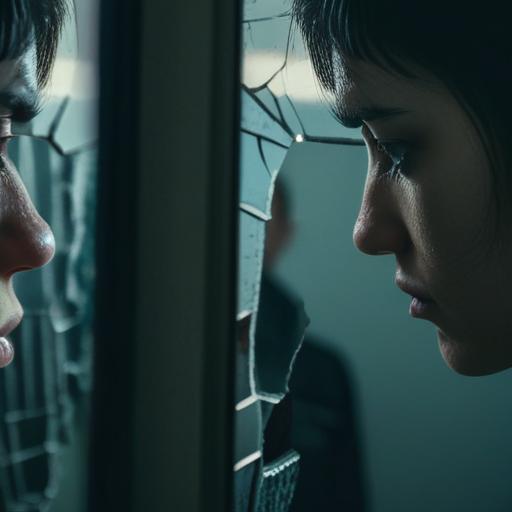
I started to hate the person who looked back at me in the mirror. He looked successful. He wore the right clothes. He had the right job. But he had dead eyes. He was a husk, hollowed out by the constant demand for more.
The Breaking Point
The breaking point wasn’t dramatic. I didn’t get fired or divorced or sick.
I just went for a walk.
I went to a park on the edge of the city. It was a Tuesday morning (I had taken a “mental health day,” which in the city means “I am about to snap so I will work from home but go for a 20 minute walk”).
I sat on a bench. And I watched a bird.
It was just a sparrow. It was hopping around in the dirt, looking for crumbs. It wasn’t rushing. It wasn’t optimizing. It wasn’t trying to be a “better” sparrow. It was just… existing.
And I started to cry.
I cried because I missed myself. I missed the version of me that could watch a bird without feeling guilty for not checking Slack. I missed the version of me that was kind, not just “nice” (there is a difference; “nice” is a social lubricant, “kind” is a moral stance).
I realized that if I stayed in this city, the Soft Self would die. It would suffocate under the weight of the Sharp Self.
And I decided I wanted to save him.
Finding a Container for the Soft Self
Leaving was hard. The city told me I was “giving up.” It told me I couldn’t “hack it.”
And maybe that’s true. Maybe I couldn’t hack it. But maybe “hacking it” isn’t the point of life.
I moved to a place that doesn’t care about my job title. A place where the internet is spotty and the coffee shops don’t have WiFi. A place where, if you check your watch while someone is talking, they will ask you what’s wrong.
At first, I was still sharp. I walked too fast. I interrupted. I tapped my foot when the line at the grocery store moved slowly.
But slowly, the feedback loop changed.
Here, when I was impatient, people looked at me with confusion, not respect. When I talked about work, they changed the subject to the weather or the garden. The environment stopped rewarding the Sharp Self. So the Sharp Self began to atrophy.
And the Soft Self began to wake up.
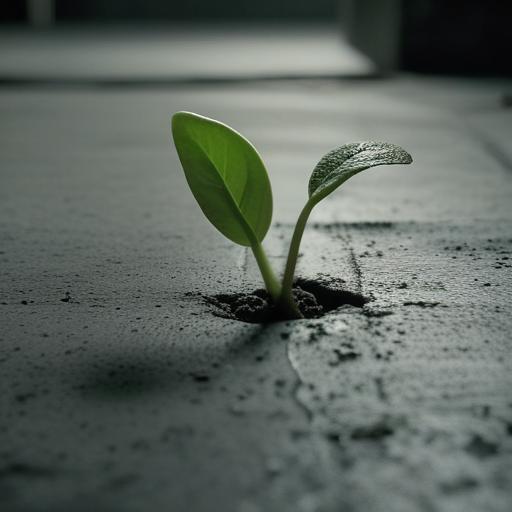
It took time. It took years. But eventually, I found I could listen to a story without looking for the point. I could sit in a chair without needing to produce something. I could be aimless without feeling worthless.
I am not as “successful” as I was. I make less money. I have less “clout.”
But I like myself again.
And that, I have realized, is the only metric that actually matters.
If you feel like you are becoming a person you don’t like, look at your environment. Are you a shark in a tank? Are you a root in a box of concrete?
Maybe you’re not a bad person. Maybe you’re just in the wrong container.
You don’t have to change yourself. you just have to move.