I stayed because it made sense on paper
A story about checking all the boxes and feeling hollow.
I stayed because it made sense on paper
The spreadsheet was perfect.
I had the job. The title was “Senior Director,” which sounded important enough to justify the ulcers. I had the apartment—exposed brick, neighborhood with a 98/100 Walk Score, three coffee shops within spitting distance that sold $7 oat milk lattes.
I had the friends. We were a “pod.” We did brunch. We complained about the subway. We went to upstate weddings in barns, wearing the same muted tones, taking the same photos of bespoke cocktails.
On paper, I had won.
If you looked at my life from the outside, it was a brochure for Success in the Modern City. I was 32. I was making money. I was “in the mix.” I had achieved what I was told to want.
So why did I wake up every morning with a feeling like a wet wool blanket settled over my chest?
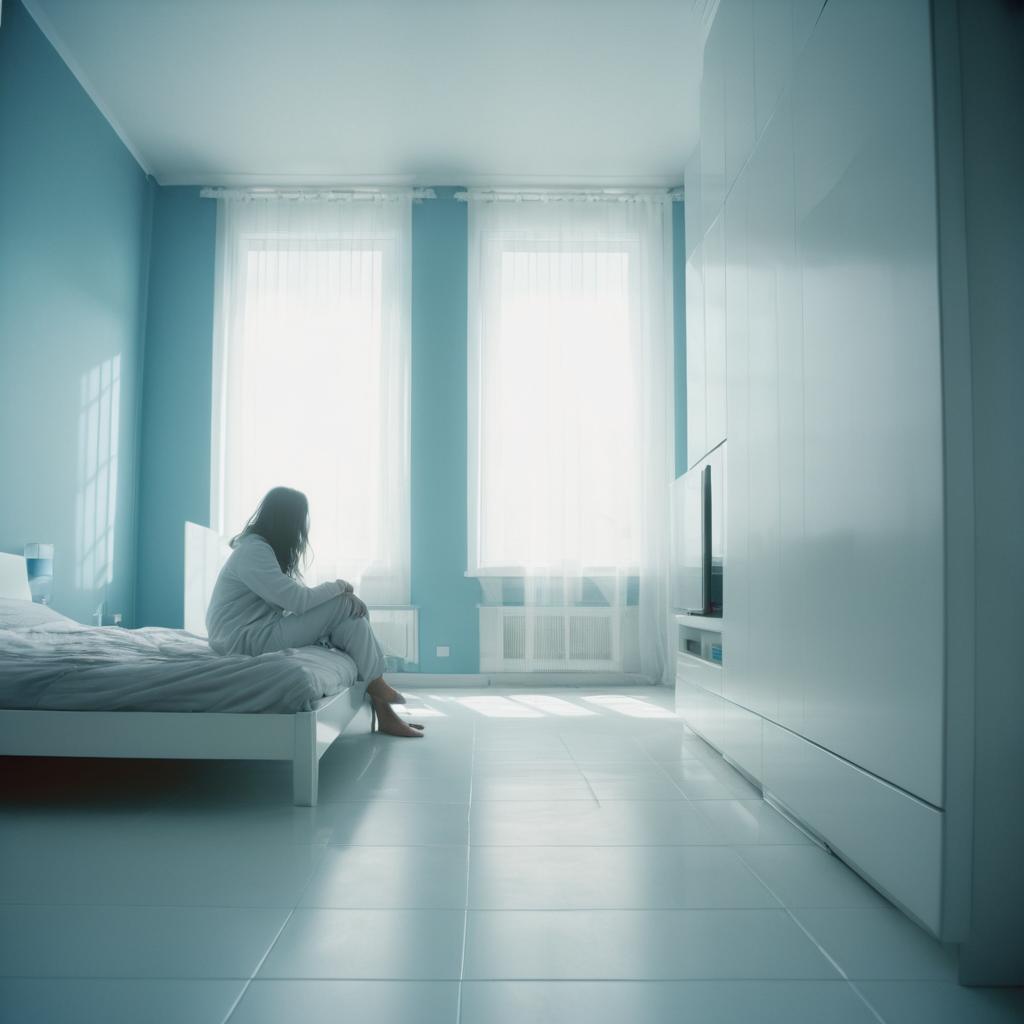 It was beautiful, but it felt like a waiting room.
The Architecture of a Mistake
I remember the day I signed the lease. It was a Tuesday in November. Ideally, this should have been a moment of triumph. I was moving into a building with a doorman and a gym I would never use. The broker, a man with too much gel in his hair and a suit that cost more than my first car, shook my hand and said, “Welcome to the good life.”
I smiled. I signed. I felt… nothing.
Actually, that’s not true. I felt a low-grade nausea, the kind you get when you eat too much sugar on an empty stomach. But I pushed it down. I told myself it was just nerves. I told myself it was Imposter Syndrome. I told myself I was just adjusting to my “new normal.”
For the next three years, I lived in that apartment like a guest. I bought the right furniture—mid-century modern, clean lines, nothing that demanded attention. I kept it immaculate. I never hung anything on the walls that wasn’t framed properly.
But I never sat on the couch to read. I sat there to check emails. I never used the kitchen to cook elaborate meals; I used it to plate takeout. The space wasn’t a home; it was a storage unit for my body between work shifts.
I didn’t know it then, but I was building a cage. A very expensive, very tasteful cage.
The Logical Trap
The problem with a life that “makes sense” is that it is very hard to argue with.
When you are unhappy in a “bad” place—a town with no jobs, a dangerous neighborhood, a drafty house—it’s easy to leave. Everyone understands. You say, “I’m moving to find work,” or “I need a safer street,” and they nod. They validate you. The exit door is wide open.
But when you are unhappy in a “good” place? You sound like a lunatic.
“You’re leaving [Major City]? But you have rent control!” “You’re quitting that firm? But you’re on the partner track!” “You have access to the best culture in the world!”
I sat in therapy and tried to explain it. “I just don’t feel… connected,” I’d say, struggling to find the words that wouldn’t make me sound ungrateful.
“Well,” my therapist would say, clicking her pen, “Have you tried joining a club? Have you tried reframing your commute as ‘me time’? Maybe you need to optimize your morning routine.”
We treated the symptom. We never looked at the disease. The disease was simple: I was a golden retriever trying to live in a tank comprising entirely of water.
I wasn’t a bad dog. But I was drowning.
 My life was optimized down to the minute, but the soul was missing.
The Somatic Protest
The body knows before the mind does.
My mind was still convinced I was “living the dream.” My mind was writing the narrative: Look at you, successful urban professional.
But my body was staging a protest.
First, it was the sleep. I would wake up at 3:17 AM, heart hammering against my ribs, convinced something terrible was about to happen. There was no intruder. There was no fire. There was just… the city. The hum of it. The pressure of millions of people all trying to be someone.
Then, it was the jaw. I started grinding my teeth so hard I cracked a molar. My dentist asked if I was under stress. “Just normal work stuff,” I lied.
Then, the digestion. Then, the skin. My body was screaming in the only language it had left. It was rejecting the environment.
I tried to fix it with bio-hacking. I bought a weighted blanket. I bought magnesium supplements. I bought a white noise machine to drown out the sirens. I bought a sun lamp to combat the shadow of the skyscraper across the street.
I was trying to simulate a natural environment inside a concrete box. I was trying to trick my biology into accepting a habitat that was fundamentally hostile to it.
It’s funny, looking back. We spend so much energy trying to “adapt” to things that we should just reject. We call it “resilience.” But sometimes, resilience isn’t a virtue. Sometimes, resilience is just a high pain tolerance for the wrong life.
The Moment of Clarity
It wasn’t a tragedy that woke me up. It wasn’t a death in the family or a breakup. It was a Tuesday.
I was walking to the subway. The noise was absolute—jackhammers tearing up the pavement, horns blasting, a man shouting at a pigeon, the screech of the train brakes arriving at the station below. The smell was hot garbage, old urine, and diesel fumes. The air felt thick, like you could chew it.
I saw a woman crying on a bench. Just openly weeping, her face buried in her hands, her shoulders shaking.
And everyone, including me, just walked past her.
We didn’t stop. We didn’t ask if she was okay. We couldn’t. If we stopped for every crying person in the city, we’d never get to work. If we opened our hearts to every moment of suffering we passed on a ten-block walk, we would collapse.
So we wore headphones. We wore sunglasses. We stared straight ahead. We hardened.
And in that moment, I froze. I looked at my own reflection in a shop window. I saw the set of my jaw, the blankness in my eyes.
And I thought: I am becoming someone who doesn’t stop.
The city demanded armor. It demanded a level of sensory shutting-down just to survive the walk to the office. And I realized that if I stayed here for another ten years, that armor would fuse to my skin. I would lose my softness. I would lose the part of me that notices the small things, the part of me that cares.
I had thought my sensitivity was a weakness to be overcome. But standing there, amidst the chaos, I realized it was my compass. And it was pointing away from here.
I stayed because it made sense on paper. But I don’t live on paper. I live in a body. And my body was dying here.
The Exit
Leaving was embarrassing. That’s the part people don’t talk about.
It felt like a retreat. I told people I was “trying something new,” or “taking a break,” or “exploring a lower cost of living.” I used rational, economic arguments to justify what was essentially a spiritual evacuation.
Deep down, I felt like a dropout. I felt like I couldn’t cut it. I felt like I was washing out of the Major Leagues.
“You’ll be back,” my friends said. “You’ll get bored. There’s no good pizza there.”
I moved to a town you’ve never heard of. It’s in the mountains. It has one stoplight. The nearest Target is forty minutes away.
My rent is one-third of what it was. I make less money because I took a remote job with a “lower adjustment.” There is no Walk Score because you have to drive everywhere. The internet goes out when it snows.
But yesterday, I was sitting on my porch.
It was dusk. The “blue hour.” The mist was settling into the valley below, turning the trees into soft, ghostly shapes. A hawk circled overhead. The air smelled like pine needles and damp earth, not exhaust.
I had a cup of coffee. I wasn’t checking my phone. I wasn’t thinking about my “brand.” I wasn’t optimizing my evening.
I was just… sitting.
And for the first time in five years, my shoulders were two inches lower. The hum in my chest was gone. The silence wasn’t empty; it was full. It was holding me.
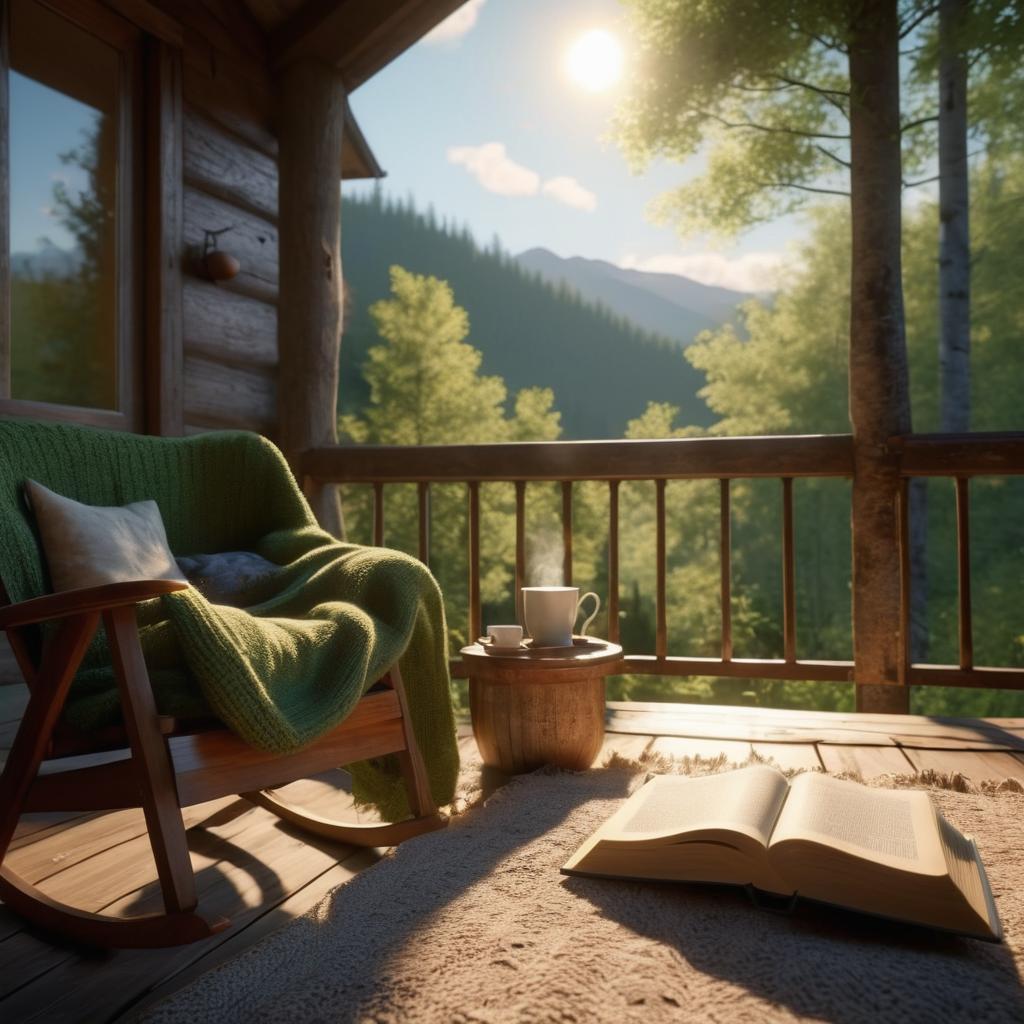 The silence wasn’t empty. It was full.
The Reframing
I used to think that leaving was quitting. I thought that if you couldn’t bloom where you were planted, you were a bad seed.
But I was wrong.
You are not a machine. You are an organism.
If you plant a cactus in a rainforest, it will rot. It doesn’t matter how much you motivate the cactus. It doesn’t matter if the cactus tries to “optimize” its water intake. It will die.
It is not a bad cactus. It is simply in a place that does not understand what it needs to thrive.
I was a cactus in a rainforest, drowning in the wet, heavy air of expectation. Now, I am in the desert. The air is dry. The sun is hot. And finally, finally, I am growing.
If you are reading this, and you feel that wet wool blanket on your chest, listen to it.
The spreadsheet doesn’t know you. The paper doesn’t know you.
But your body knows.
You are allowed to leave the “perfect” life if it isn’t perfect for you. You are allowed to walk away from the prize if the prize hurts to hold.
Come find your desert. Or your ocean. Or your mountain.
The door is open.
— A Recovering Optimizer